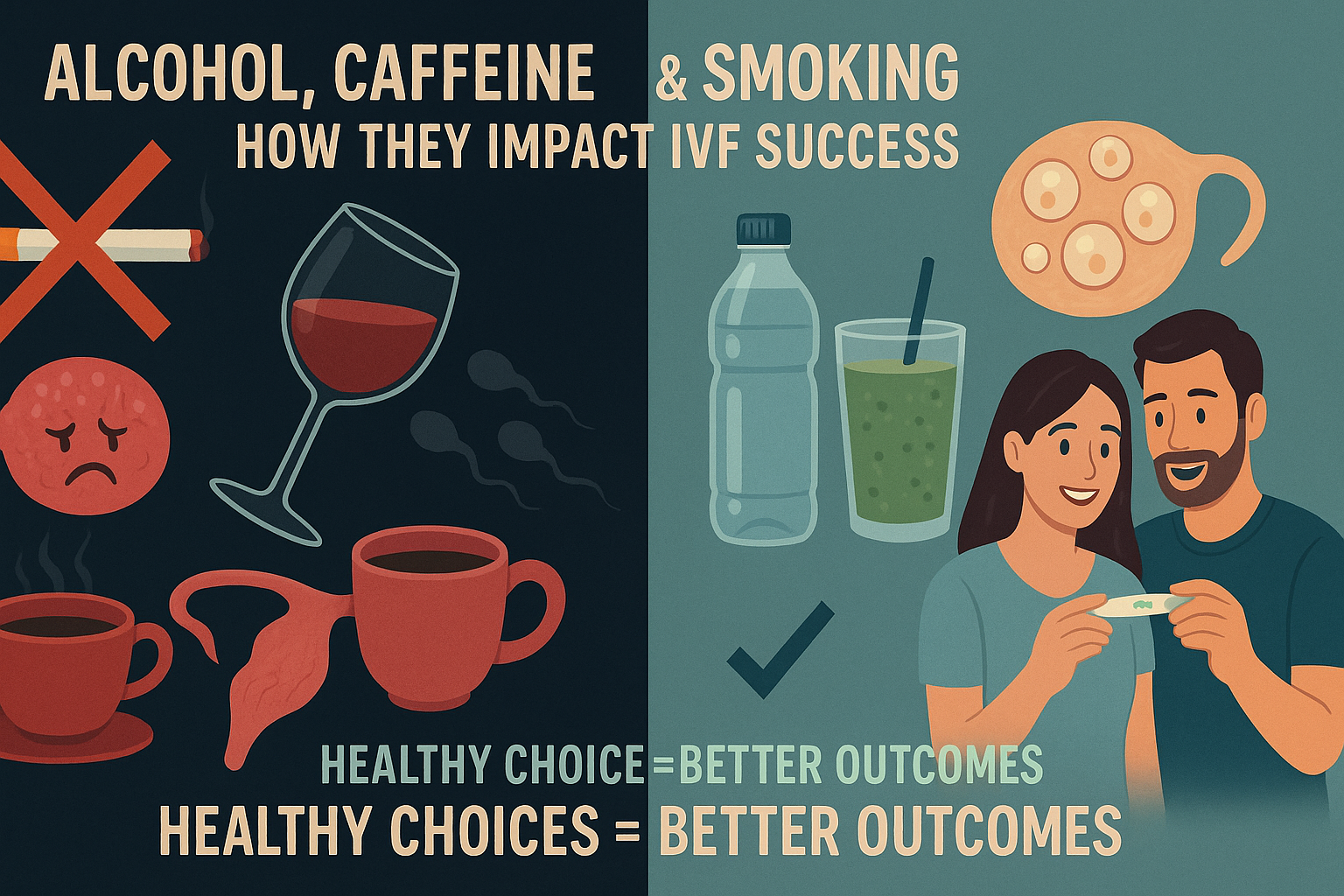
In vitro fertilization (IVF) is a complex and emotionally taxing process that requires careful preparation to maximize success. Lifestyle factors such as alcohol consumption, caffeine intake, and smoking can significantly impact IVF outcomes. Understanding how these substances affect fertility and embryo development is crucial for couples undergoing treatment.
1. Alcohol and IVF: Does Drinking Affect Success Rates?
How Alcohol Impacts Fertility
Alcohol consumption can negatively affect both male and female fertility:
- Women: Heavy drinking disrupts hormone levels, impairs ovulation, and may reduce ovarian reserve. Even moderate drinking can lower IVF success rates.
- Men: Alcohol reduces sperm count, motility, and morphology, decreasing the chances of fertilization.
Research Findings on Alcohol and IVF
- A study published in BMJ found that women who drank more than 7 alcoholic drinks per week had a lower IVF success rate compared to non-drinkers.
- Another study in Human Reproduction showed that even moderate drinking (3-6 drinks per week) could reduce live birth rates by up to 15%.
Recommendations
- Avoid alcohol at least 3 months before IVF to improve egg and sperm quality.
- Some clinics recommend complete abstinence during treatment to optimize outcomes.
2. Caffeine and IVF: Does Coffee Reduce Your Chances?
How Caffeine Affects Fertility
Caffeine is a stimulant that may interfere with reproductive hormones and implantation:
- Women: High caffeine intake (>300 mg/day) has been linked to longer time to conception and higher miscarriage risk.
- Men: Excessive caffeine may reduce sperm DNA integrity.
Research Findings on Caffeine and IVF
- A study in Fertility and Sterility found that women consuming >200 mg of caffeine daily (about 2 cups of coffee) had lower IVF success rates.
- Another study suggested that >500 mg/day (5+ cups) could reduce live birth rates by up to 50%.
Recommendations
- Limit caffeine to <200 mg per day (1-2 small cups of coffee).
- Consider switching to decaf or herbal teas during IVF treatment.
3. Smoking and IVF: One of the Biggest Risk Factors
How Smoking Damages Fertility
Smoking is one of the most harmful lifestyle factors for IVF success:
- Women:
- Accelerates ovarian aging, reducing egg quantity and quality.
- Increases risk of miscarriage and ectopic pregnancy.
- Men:
- Causes DNA fragmentation in sperm, leading to poor embryo quality.
Research Findings on Smoking and IVF
- Studies show that female smokers require nearly twice as many IVF cycles to conceive compared to non-smokers.
- A study in Human Reproduction Update found that smoking reduces IVF success rates by up to 34%.
- Even secondhand smoke can negatively impact outcomes.
Recommendations
- Quit smoking at least 3-6 months before IVF to improve egg and sperm quality.
- Seek support (nicotine patches, counseling) if needed—many clinics require smoking cessation before treatment.
Conclusion: Optimizing IVF Success by Avoiding Harmful Substances
To maximize IVF success, couples should:
✔ Avoid alcohol (or limit drastically) before and during treatment.
✔ Reduce caffeine to <200 mg per day.
✔ Quit smoking at least 3-6 months before IVF.
Making these lifestyle changes can significantly improve embryo quality, implantation rates, and the chances of a healthy pregnancy. If you’re struggling with quitting smoking or reducing caffeine/alcohol, consult your fertility specialist for personalized advice.
FAQs
Q: Can one glass of wine affect IVF success?
A: Occasional light drinking may not have a major impact, but most experts recommend complete avoidance during IVF cycles.
Q: Is decaf coffee safe during IVF?
A: Yes, decaf is a good alternative since it contains minimal caffeine.
Q: How long should I quit smoking before IVF?
A: Ideally, 3-6 months before starting treatment to allow for improved egg and sperm quality.