
In-vitro fertilization (IVF) has transformed the landscape of fertility treatment across the world. What was once a distant hope has now become a realistic pathway to parenthood for millions of couples struggling with infertility. While IVF as a whole is a complex and multifaceted process, one of its most critical stages revolves around the development and transfer of blastocysts.
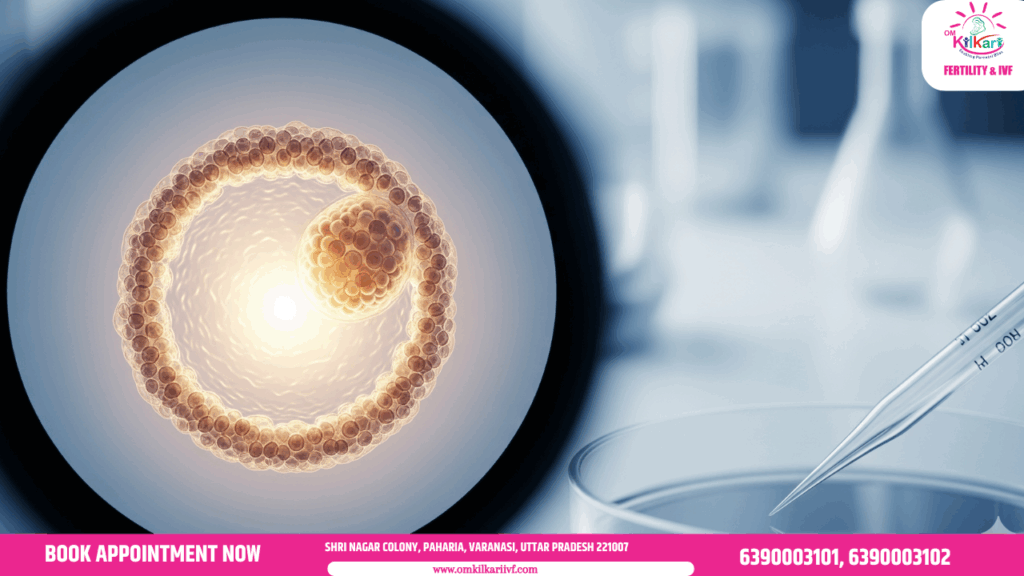
The word “blastocyst” might sound technical, but it is simply the term for a fertilized embryo at a specific stage of growth. Understanding what blastocysts are, how they develop, and why they matter in IVF can help patients make informed decisions during their fertility journey. In this blog, we’ll explore in detail the science of blastocysts, their role in IVF, the advantages of blastocyst transfer, and what patients need to know about this crucial stage.
1. What is a Blastocyst?
A blastocyst is an embryo that has developed for about five to six days after fertilization. At this stage, it is more advanced than the early embryo, which consists of only a few cells. A blastocyst is typically made up of:
- Trophectoderm (TE): These cells form the outer layer, which later develops into the placenta.
- Inner Cell Mass (ICM): A small cluster of cells inside the blastocyst that develops into the baby.
- Blastocoel: A fluid-filled cavity that helps provide structure and facilitates further development.
This stage is crucial because the embryo is preparing to implant into the uterine lining, which is a key step toward achieving pregnancy.
2. How Does an Embryo Develop into a Blastocyst?
The journey of an embryo to becoming a blastocyst can be broken down into several stages:
- Day 0 (Fertilization): Egg and sperm combine to form a zygote.
- Day 1–2: The zygote undergoes cell division, forming a two-cell and then a four-cell stage.
- Day 3: The embryo reaches the eight-cell or “cleavage stage.”
- Day 4: The embryo becomes a morula, a compact ball of 16–32 cells.
- Day 5–6: The morula develops into a blastocyst with a fluid-filled cavity, differentiated cells, and a clear inner cell mass.
In natural conception, the embryo typically reaches the blastocyst stage while traveling down the fallopian tube and then implants in the uterus. In IVF, embryologists closely monitor embryos in the laboratory until they reach this stage.
3. The Importance of Blastocyst Development in IVF
Blastocysts are significant in IVF because they represent a stage of embryo development where implantation potential is highest. Here’s why they matter:
- Higher Implantation Potential: Blastocysts have a better chance of attaching to the uterine lining compared to earlier-stage embryos.
- Natural Synchronization: By transferring at the blastocyst stage (Day 5–6), the embryo is in sync with the uterus, mimicking natural conception.
- Better Embryo Selection: Embryologists can observe which embryos reach the blastocyst stage, helping select the healthiest ones.
- Reduced Multiple Pregnancy Risk: Since blastocysts implant more efficiently, fewer embryos need to be transferred, lowering the risk of twins or triplets.
4. Blastocyst Culture in the IVF Laboratory
In IVF, embryos are cultured in a special environment for several days. This period is known as blastocyst culture, and it plays a vital role in the success of treatment.
Conditions in Blastocyst Culture:
- Nutrient-rich media that mimic the environment of the fallopian tube and uterus.
- Controlled temperature, pH, and oxygen levels to support development.
- Regular monitoring by embryologists to track growth and cell division.
Not every embryo reaches the blastocyst stage. Typically, only the strongest embryos make it this far, which is why reaching this stage is considered a marker of quality and viability.
5. Blastocyst Transfer vs. Cleavage Stage Transfer
Traditionally, embryos were transferred on Day 2 or Day 3 at the cleavage stage (6–8 cells). However, modern IVF centers often recommend blastocyst transfer on Day 5–6. Let’s compare the two approaches:
| Feature | Cleavage Stage Transfer (Day 2–3) | Blastocyst Transfer (Day 5–6) |
|---|---|---|
| Timing | Earlier, before natural implantation stage | Closer to natural implantation timing |
| Implantation Rate | Lower | Higher |
| Embryo Selection | Limited | More accurate |
| Risk of Multiple Pregnancy | Higher (due to more embryos transferred) | Lower (fewer embryos needed) |
| Success Rates | Moderate | Significantly higher |
Because blastocysts are more advanced and robust, transferring them often leads to higher pregnancy rates.
6. Advantages of Blastocyst Transfer
1. Higher Success Rates
Studies show that blastocyst transfer results in higher implantation and live birth rates compared to earlier-stage embryo transfers.
2. Reduced Risk of Multiple Pregnancies
With blastocysts, doctors can transfer just one embryo (single embryo transfer, or SET) while maintaining high success rates, thus lowering the risks associated with twins or triplets.
3. Improved Embryo Selection
Only embryos that reach the blastocyst stage are chosen for transfer, increasing the chances of success.
4. Better Synchronization with Uterus
The timing of blastocyst transfer closely mimics natural conception, where embryos implant around Day 5–6.
5. Enables Advanced Genetic Testing
Blastocysts provide enough cells for procedures like Preimplantation Genetic Testing (PGT), which can identify chromosomal abnormalities before transfer.
7. Challenges of Blastocyst Culture and Transfer
While blastocyst transfer has many benefits, it also comes with challenges:
- Not All Embryos Survive: Some embryos may arrest before reaching the blastocyst stage.
- Fewer Embryos Available: Patients with a low number of fertilized eggs may have limited options if none reach the blastocyst stage.
- Emotional Stress: Waiting until Day 5–6 can be stressful for patients, especially if no embryos survive.
- Cost Factor: Extended culture and monitoring can increase the overall cost of IVF treatment.
8. Blastocyst Freezing (Vitrification)
Many IVF clinics freeze extra blastocysts for future use. This process, called vitrification, involves ultra-rapid freezing to preserve embryos.
Benefits of Freezing Blastocysts:
- Provides another chance for pregnancy without repeating the full IVF cycle.
- Reduces costs and stress in subsequent cycles.
- Increases cumulative success rates over time.
- Allows flexibility in treatment timing.
Frozen embryo transfers (FET) using blastocysts are now common and highly successful, thanks to improved freezing technology.
9. Blastocyst Grading System
To assess embryo quality, embryologists use a grading system that evaluates:
- Expansion: How well the blastocyst has expanded and filled with fluid.
- Inner Cell Mass (ICM): Quality and number of cells that will form the fetus.
- Trophectoderm (TE): Quality of outer cells that will form the placenta.
A high-grade blastocyst has a good balance of expansion, a well-structured ICM, and a strong TE, all of which increase implantation chances.
10. Blastocysts and Preimplantation Genetic Testing (PGT)
One of the biggest advantages of blastocyst transfer is that it allows genetic testing. A few cells from the trophectoderm can be biopsied and tested for:
- Chromosomal abnormalities (PGT-A)
- Single-gene disorders (PGT-M)
- Structural rearrangements (PGT-SR)
This process ensures that only healthy embryos are transferred, reducing the risk of miscarriage and genetic disorders.
11. Patient Factors Affecting Blastocyst Development
Not all patients will produce embryos that reach the blastocyst stage. Factors influencing success include:
- Maternal Age: Younger women usually have higher-quality eggs, leading to better blastocyst development.
- Sperm Quality: Healthy sperm is crucial for proper fertilization and embryo growth.
- Laboratory Conditions: Advanced technology and skilled embryologists improve outcomes.
- Underlying Health Conditions: Conditions like PCOS, endometriosis, or diminished ovarian reserve can impact embryo development.
12. Blastocysts and Single Embryo Transfer (SET)
With blastocysts, many IVF clinics encourage Single Embryo Transfer to minimize risks while maintaining high success rates. This approach ensures:
- Healthy pregnancies
- Lower risk of complications (like preterm birth or low birth weight)
- Better maternal and neonatal outcomes
13. Emotional and Psychological Aspects
The journey to blastocyst transfer can be emotionally challenging. Patients often feel anxious about whether embryos will survive to Day 5. Supportive counseling, clear communication, and patient education can reduce stress and make the process smoother.
14. Future of Blastocyst Research in IVF
Ongoing research is making blastocyst culture and transfer even more effective. Emerging areas include:
- Artificial Intelligence (AI): Used to analyze embryo growth patterns for better selection.
- Improved Culture Media: Designed to mimic the natural reproductive environment more closely.
- Time-Lapse Imaging: Continuous monitoring without disturbing embryos.
- Stem Cell Research: Exploring how embryonic development insights can improve IVF outcomes.
15. Key Takeaways for Patients
- A blastocyst is a Day 5–6 embryo with high implantation potential.
- Blastocyst transfer mimics natural conception more closely than earlier-stage transfers.
- The process improves pregnancy rates while reducing risks.
- Not all embryos reach the blastocyst stage, so individual patient factors matter.
- Blastocyst freezing and genetic testing further enhance IVF success and safety.
Conclusion
Blastocysts represent one of the most crucial stages in IVF. Their development, selection, and transfer play a defining role in determining whether a cycle will result in a successful pregnancy. By choosing to undergo blastocyst transfer, patients benefit from improved implantation rates, reduced risks, and the ability to make informed choices through genetic testing.
While the path may be emotionally and physically demanding, understanding the role of blastocysts empowers patients to actively participate in their treatment journey. As science and technology continue to evolve, blastocyst-based IVF is set to bring even more success and hope to couples worldwide.