
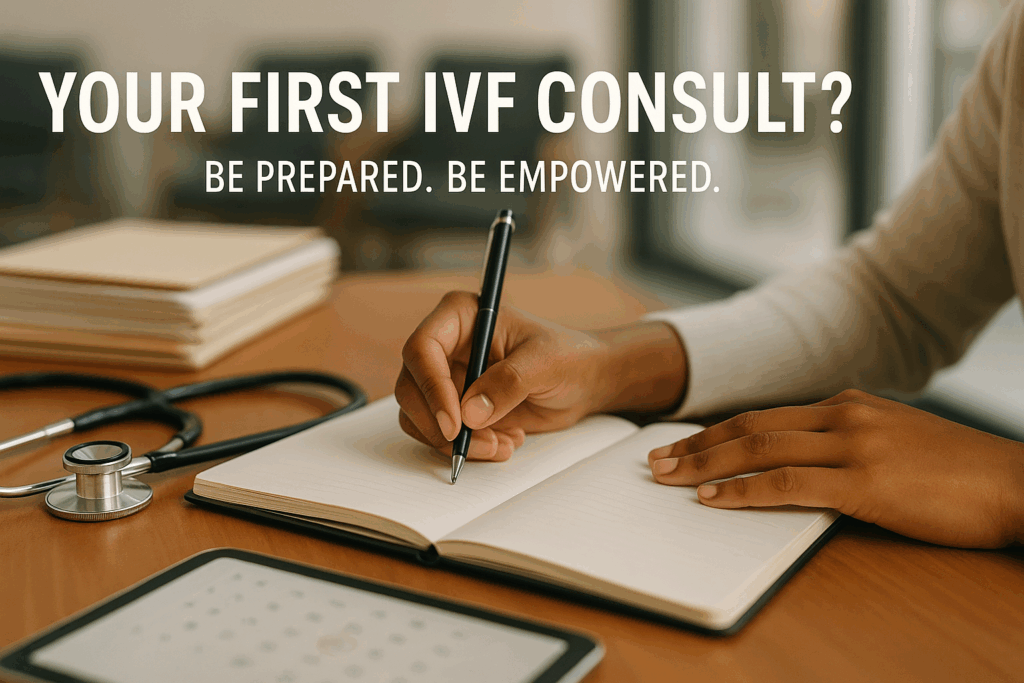
The decision to pursue In Vitro Fertilization (IVF) is a significant step on your fertility journey. Your first consultation with a Reproductive Endocrinologist (REI) is the crucial starting point, but it can also feel overwhelming. Walking in prepared transforms anxiety into empowerment. Here’s your comprehensive guide to getting ready and knowing what to expect.
Phase 1: Gather & Organize (Before the Appointment)
- Compile Your Medical History (Exhaustively):
- Your Records: Gather ALL relevant medical records – gynecological history, past surgeries (especially abdominal/pelvic), pap smears, STI testing, genetic carrier screening results (if any), and records of any previous fertility evaluations or treatments (IUI, medications, etc.).
- Partner’s Records (If Applicable): Include semen analysis reports, medical history, genetic screening, and any relevant health conditions.
- Cycle History: Track your menstrual cycles meticulously for at least 2-3 months (start dates, length, symptoms, ovulation signs if tracked). Bring this log.
- Medication List: Note all current medications, supplements, and vitamins (dosages included).
- Family History: Detail any known fertility issues, recurrent miscarriages, birth defects, or genetic conditions on both sides.
- Understand Your Insurance (The Fine Print Matters):
- Coverage: Contact your insurance provider specifically about IVF coverage. Ask about lifetime maximums, cycle limits, medication coverage, diagnostic testing coverage, and any prerequisites (like required IUIs). Get details in writing.
- Pre-Authorization: Find out if pre-authorization is needed for the consultation or any initial testing.
- Out-of-Pocket Estimates: Request a detailed cost estimate from the clinic before the appointment, including consultation fees, diagnostic tests, potential treatment cycle costs, and medication costs. Understand payment plans or financing options.
- Research the Clinic & Doctor:
- Success Rates: Review the clinic’s SART (Society for Assisted Reproductive Technology) or CDC (Centers for Disease Control and Prevention) success rates. Compare them to national averages, considering your age group and diagnosis. Understand how they calculate rates.
- Philosophy & Approach: Look at the clinic’s website. Do their values align with yours? What is their approach to treatment (e.g., aggressive vs. conservative)?
- Logistics: Note location, hours, emergency protocols, and how communication is handled.
- Reflect on Your Journey & Goals:
- Diagnosis (If Known): Understand your suspected or confirmed infertility diagnosis.
- Timeline & Expectations: How long have you been trying? What are your hopes and fears regarding IVF? What are your non-negotiables?
- Personal Limits: Consider your emotional, physical, and financial limits regarding the number of cycles you might attempt.
Phase 2: Prepare Your Questions (The Heart of Preparation)
This is YOUR appointment. Come with a written list! Prioritize your top concerns. Key areas to cover:
- Diagnosis & Prognosis:
- “Based on our history and test results, what is our most likely diagnosis?”
- “What is our prognosis for success with IVF specifically?”
- “Are there any other diagnostic tests we absolutely need before proceeding?”
- The Proposed IVF Plan:
- “Can you walk us through the exact steps of a typical IVF cycle at your clinic?”
- “What specific protocol (medications, dosages, timeline) do you recommend for us and why?”
- “How will you monitor my response (ultrasounds, blood work)?”
- Medications & Side Effects:
- “What medications will I need? Can you provide a detailed list and estimated costs?”
- “What are the common and potential serious side effects?”
- “Who teaches injection techniques? Is support available?”
- Procedures (Egg Retrieval & Transfer):
- “Describe the egg retrieval and embryo transfer procedures. What anesthesia is used?”
- “What is your clinic’s approach to embryo culture and selection (e.g., Day 3 vs. Day 5 transfer, PGT-A testing)?”
- Risks & Realistic Success Rates:
- “What are the specific risks associated with IVF for me/my partner?”
- “What are the success rates for someone with my age/diagnosis at this clinic? Live birth rate per cycle started/embryo transfer?”
- “What is the risk of multiples?”
- Costs & Logistics:
- “Can you provide a detailed, written breakdown of all estimated costs for one full cycle (including meds, monitoring, procedures, anesthesia, lab fees, embryo freezing/storage)?”
- “What is your cancellation policy? What happens if I respond poorly to meds?”
- “How does communication work? Who is our main point of contact? How quickly are calls/emails returned?”
- Ethics & Clinic Policies:
- “What is your clinic’s policy on the number of embryos transferred?”
- “What happens to unused embryos? What are our options (donate to science, discard, donate to another couple)?”
Phase 3: During the Consultation
- Arrive Early: Bring your ID, insurance card, completed new patient forms, your organized records, and your question list. Bring your partner or a support person if possible.
- Be Open & Honest: Share your full medical history, lifestyle factors (smoking, alcohol, caffeine, exercise), and emotional state candidly. This information is crucial.
- Listen Actively & Take Notes: There will be a lot of information. Don’t hesitate to ask the doctor or nurse to slow down or repeat something. Your support person can help take notes.
- Ask ALL Your Questions: Refer to your list. Don’t feel rushed. This is your time.
- Understand Next Steps: Before leaving, clarify:
- What diagnostic tests are needed immediately?
- When will you get test results?
- Who will contact you?
- What is the proposed timeline for starting?
- What do you need to do before the next contact?
Phase 4: After the Consultation
- Debrief: Discuss everything with your partner/support person while it’s fresh. Compare notes.
- Follow Up: Complete any recommended tests promptly.
- Review & Research: Look up any unfamiliar terms or concepts discussed (use reputable sources like ASRM – American Society for Reproductive Medicine).
- Evaluate the Clinic Fit: Reflect on your interaction.
- Did you feel heard and respected?
- Were questions answered clearly and patiently?
- Did the doctor explain the rationale behind recommendations?
- Did the staff seem organized and supportive?
- Are the logistics (location, communication style, costs) manageable?
- Get a Second Opinion (If Needed): If you have doubts, significant disagreements with the proposed plan, or just want confirmation, seeking a second opinion is completely valid and common in fertility care.
- Address Emotional Needs: This process is stressful. Lean on your support system, consider joining a support group (RESOLVE is a great resource), or seek counseling if needed. Practice self-care.
Managing Expectations: What’s Realistic?
- It’s an Information Gathering Session: The first consult is primarily about reviewing history, outlining the potential IVF process, and ordering necessary tests. You likely won’t get a guaranteed success rate or start treatment that day.
- Diagnostic Tests are Crucial: Your specific protocol depends heavily on test results (AMH, FSH, AFC, semen analysis, uterine evaluation, infectious disease screening). Be prepared for this essential step.
- Costs are Complex & Significant: Get detailed quotes in writing. Understand exactly what is included and what isn’t. Medication costs alone can be staggering.
- Emotional Rollercoaster: Acknowledge the mix of hope, anxiety, and vulnerability. Be kind to yourself and your partner.
- Success is Not Guaranteed: IVF is advanced medicine, but it’s not a promise. Understanding your clinic’s realistic success rates for your specific situation is vital.
Conclusion: Your Journey, Your Advocate
Your first IVF consultation is the foundation for the path ahead. By arriving organized, informed, and armed with thoughtful questions, you transform from a passive patient into an active partner in your care. This preparation reduces anxiety, fosters trust with your medical team, and allows you to make confident decisions aligned with your goals and values. Remember, knowledge is power, and advocating for yourself is essential. Take a deep breath, trust your preparation, and step into this consultation ready to build the future you envision.