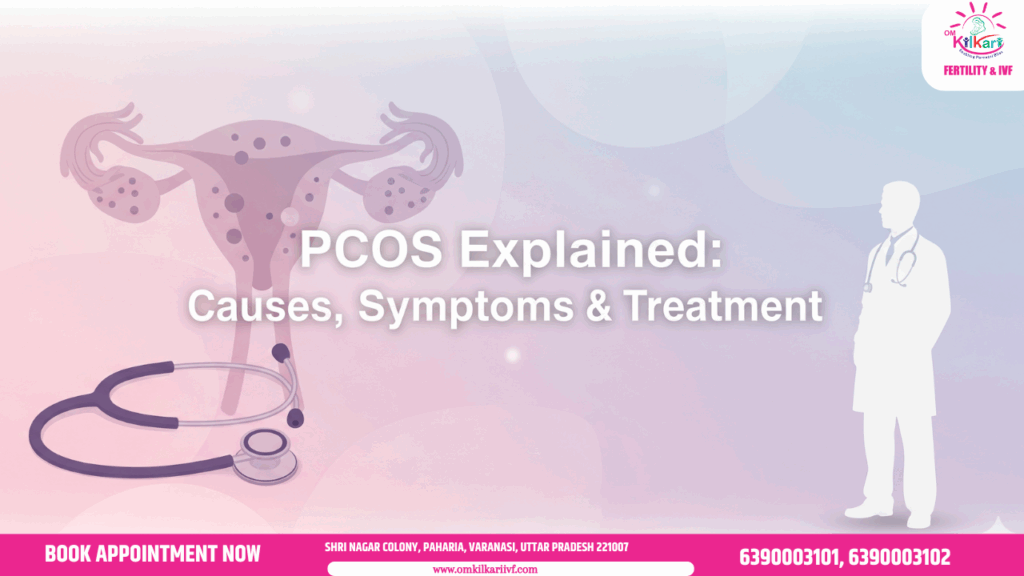
Polycystic Ovary Syndrome (PCOS) is one of the most common hormonal and reproductive health disorders affecting women of reproductive age. Despite its high prevalence, PCOS is still surrounded by myths, misdiagnosis, and delayed treatment. According to studies, nearly 1 in 10 women of childbearing age worldwide are affected by PCOS, though the number may be higher due to underreporting. It is a multifaceted condition that impacts not only fertility but also a woman’s metabolic, emotional, and long-term health.
In this blog, we will take a comprehensive look at PCOS — its definition, causes, symptoms, diagnosis, and treatment options — while also exploring lifestyle changes and holistic approaches that can make a significant difference.
1. Understanding PCOS
PCOS stands for Polycystic Ovary Syndrome, a hormonal disorder characterized by irregular ovulation, excessive androgen (male hormone) levels, and polycystic ovaries.
- Polycystic ovaries mean that the ovaries contain numerous small fluid-filled sacs (follicles). These follicles are immature eggs that fail to regularly develop and release.
- Hormonal imbalance is central to PCOS. Women with PCOS often produce higher-than-normal amounts of androgens, which interfere with ovulation and cause symptoms like acne, hair growth, and irregular cycles.
- Insulin resistance also plays a big role. Many women with PCOS have insulin resistance, which can lead to weight gain and increased risk of type 2 diabetes.
PCOS is not a single disease but a syndrome — a group of symptoms that affect different systems of the body, including reproductive, metabolic, dermatological, and psychological health.
2. How Common Is PCOS?
PCOS is one of the leading causes of infertility and metabolic complications in women. Global research suggests:
- Around 8–13% of women worldwide are diagnosed with PCOS.
- In India, the prevalence is even higher, with 20–25% of women of childbearing age believed to have PCOS.
- Nearly 70% of cases remain undiagnosed, leading to long-term health challenges.
This makes awareness, early diagnosis, and timely treatment absolutely critical.
3. What Causes PCOS?
The exact cause of PCOS is not known, but several interlinked factors contribute:
a) Genetic Factors
PCOS often runs in families. If your mother or sister has PCOS, you are more likely to develop it. Several genes involved in hormone regulation, insulin resistance, and inflammation are believed to contribute.
b) Hormonal Imbalance
Women with PCOS often have elevated levels of:
- Androgens: Male hormones present in small amounts in women. Higher levels lead to acne, hair growth, and ovulation issues.
- Luteinizing Hormone (LH): High LH levels stimulate androgen production in the ovaries.
- Insulin: Excess insulin triggers the ovaries to produce more androgens.
c) Insulin Resistance
Insulin resistance means that the body’s cells don’t respond properly to insulin, leading to high blood sugar and compensatory excess insulin. This excess insulin fuels androgen production and disrupts ovulation.
d) Inflammation
Women with PCOS often show low-grade inflammation, which stimulates ovaries to produce androgens, worsening symptoms.
e) Lifestyle & Environmental Factors
- Sedentary lifestyle
- Poor dietary habits
- Stress and lack of sleep
- Exposure to endocrine-disrupting chemicals
These factors don’t cause PCOS directly but worsen its severity.
4. Common Symptoms of PCOS
PCOS manifests differently in every woman. Some may have visible symptoms, while others only discover it during fertility challenges. The most common signs include:
a) Menstrual Irregularities
- Infrequent periods (oligomenorrhea)
- No periods at all (amenorrhea)
- Heavy or prolonged menstrual bleeding
b) Hyperandrogenism (Excess Male Hormones)
- Excess facial and body hair (hirsutism)
- Severe acne
- Male-pattern baldness or thinning hair
c) Polycystic Ovaries
- Enlarged ovaries visible on ultrasound
- Multiple small cysts (not harmful but indicative)
d) Weight-Related Issues
- Unexplained weight gain
- Difficulty losing weight despite efforts
- Fat accumulation around the waist (central obesity)
e) Fertility Problems
- Irregular ovulation or absence of ovulation
- Difficulty conceiving naturally
f) Skin Changes
- Darkened skin patches (acanthosis nigricans)
- Skin tags around the neck or armpits
g) Mental & Emotional Symptoms
- Anxiety, depression, and mood swings
- Body image issues
- Low self-esteem due to cosmetic symptoms (acne, hair growth, weight gain)
5. Health Risks Linked to PCOS
If untreated, PCOS increases the risk of several long-term health problems:
- Type 2 Diabetes: Up to 50% of women with PCOS develop diabetes before the age of 40.
- Infertility: Due to irregular ovulation.
- Heart Disease: Elevated cholesterol and high blood pressure.
- Endometrial Cancer: Long-term unopposed estrogen raises risk.
- Obesity and Metabolic Syndrome.
- Sleep Apnea: Linked with obesity and hormonal imbalance.
- Mental Health Disorders: Anxiety, depression, and eating disorders.
6. How Is PCOS Diagnosed?
There is no single test for PCOS. Doctors use a combination of medical history, physical examination, and diagnostic tests.
a) Diagnostic Criteria
According to the Rotterdam Criteria (2003), PCOS can be diagnosed if a woman has two out of three:
- Irregular or absent ovulation
- Excess androgens (clinical or biochemical)
- Polycystic ovaries on ultrasound
b) Medical History & Physical Exam
- Menstrual patterns
- Weight and BMI assessment
- Excess hair, acne, hair loss
c) Blood Tests
- Hormone levels (LH, FSH, testosterone, prolactin, thyroid hormones)
- Fasting glucose and insulin
- Lipid profile
d) Ultrasound
- Transvaginal or pelvic ultrasound to look for multiple follicles (≥12 per ovary) and enlarged ovaries.
7. Treatment Options for PCOS
There is no cure for PCOS, but it can be effectively managed with a combination of medical treatment, lifestyle modification, and holistic approaches.
a) Lifestyle Changes (First-line Treatment)
- Weight Management: Losing just 5–10% of body weight can restore ovulation and regulate periods.
- Diet: Low-glycemic index foods, whole grains, lean proteins, healthy fats, and plenty of fruits and vegetables.
- Exercise: At least 30 minutes of moderate activity 5 days a week improves insulin sensitivity.
- Stress Reduction: Yoga, meditation, and mindfulness reduce cortisol levels.
b) Medications
- For Menstrual Regulation
- Oral Contraceptives: Help regulate cycles, reduce androgens, and improve acne.
- Progesterone therapy: Prevents endometrial hyperplasia.
- For Ovulation Induction (Fertility)
- Clomiphene Citrate
- Letrozole (Femara) (often more effective than clomiphene)
- Gonadotropin injections for resistant cases.
- For Insulin Resistance
- Metformin: Improves insulin sensitivity and may restore ovulation.
- For Excess Hair & Acne
- Anti-androgens (spironolactone, finasteride, flutamide)
- Topical treatments and dermatological care.
c) Advanced Fertility Treatments
- Intrauterine Insemination (IUI)
- In Vitro Fertilization (IVF)
- Ovarian Drilling (laparoscopic surgery to reduce androgen production)
d) Holistic & Alternative Therapies
- Ayurveda and Herbal Remedies: Cinnamon, spearmint tea, and fenugreek may support insulin sensitivity.
- Acupuncture: Helps regulate hormones and menstrual cycles.
- Nutritional Supplements: Inositol, omega-3, vitamin D, and chromium may help.
8. Managing PCOS for the Long Term
PCOS requires lifelong management since it doesn’t go away completely. Some strategies include:
- Regular exercise & weight monitoring
- Balanced nutrition plan
- Regular health check-ups (diabetes, cholesterol, blood pressure)
- Tracking menstrual cycles
- Mental health support (therapy, support groups)
- Family planning and fertility counseling
9. Living with PCOS – Emotional & Social Impact
The physical symptoms of PCOS (weight gain, acne, excess hair) often affect self-esteem. Coupled with fertility challenges, many women experience emotional distress. It is important to:
- Seek counseling or therapy
- Connect with PCOS support groups
- Focus on body positivity and self-care
- Educate family members for better emotional support
10. Key Myths About PCOS
- Myth: PCOS only affects overweight women.
Fact: Even lean women can have PCOS. - Myth: PCOS always causes infertility.
Fact: Many women with PCOS conceive naturally or with treatment. - Myth: PCOS goes away after menopause.
Fact: Symptoms change, but risks like diabetes and heart disease remain. - Myth: Birth control pills cure PCOS.
Fact: Pills only manage symptoms; they don’t cure PCOS.
Conclusion
PCOS is more than a reproductive disorder — it is a lifelong condition that impacts women’s metabolic, hormonal, and emotional well-being. While the exact cause is complex, lifestyle management combined with medical treatments can help women control symptoms, restore fertility, and reduce long-term risks.
Early diagnosis, awareness, and proactive management are the keys to living a healthy and fulfilling life with PCOS. If you suspect you may have PCOS, consult a gynecologist or endocrinologist for timely evaluation and treatment.